Sun and holidays after cataract surgery
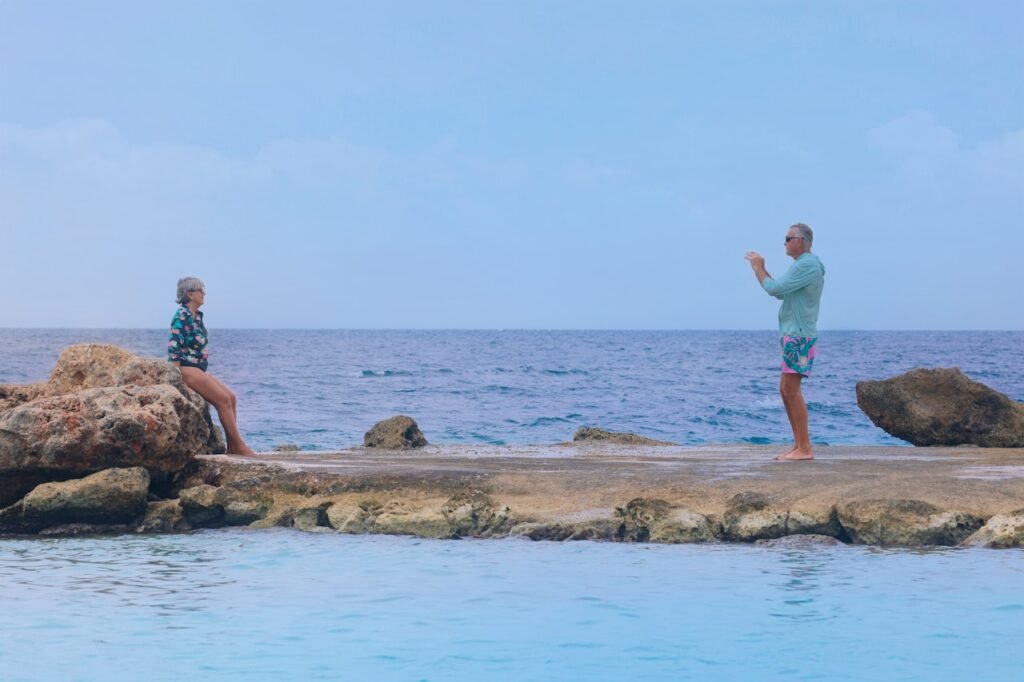
Summer is on its way, the surgery is scheduled, and the same question comes up at every consultation : will I be able to enjoy the sun, the beach and my holidays ? The answer is yes, provided you protect the operated eye and respect a few simple waiting times. The clear implant that replaces the lens lets in more light : sunglasses become essential. Here, activity by activity, is what you can resume and when.
Straight answer: yes, with sunglasses and a short waiting time
Key point. You can be in the sun and go on holiday after cataract surgery. From the very first days, wear category 3 sunglasses with a UV filter when outdoors, because the clear implant lets in more light than the clouded lens. The beach and the mountains soon become accessible again. Flying is often possible within the first few days. Swimming (pool, sea), on the other hand, has to wait about a month : anti-inflammatory eye drops temporarily lower the eye’s defences. In every case, it is your ophthalmologist who approves each activity you resume during follow-up.
Why protect your eyes from the sun after surgery
After surgery, the eye is temporarily more sensitive to light. The cornea is healing, the pupil is still reacting to the eye drops, and the perception of light changes abruptly. The French Society of Ophthalmology (SFO) recommends protecting the operated eye during the healing phase. It is a simple precaution that clearly improves comfort in the first days.
The most common phenomenon is photophobia, that discomfort when faced with bright light. Many patients feel it in the first days, especially in full sun or facing a reflection on water. This sensitivity gradually decreases as the eye recovers.
Why is the difference so noticeable ? The cataractous lens naturally filtered part of the light, a little like tinted glass. The artificial implant, on the other hand, is perfectly clear. Many patients actually find colours more vivid after the procedure. Modern implants often include an anti-UV filter, but they do not replace wearing sunglasses. To learn more about how it works, see our dedicated page on cataract surgery.
How long to wait before sun exposure or going on holiday
There is no single waiting time : every recovery is individual, and your ophthalmologist sets the schedule during post-operative follow-up. The French National Authority for Health (HAS) stresses the importance of follow-up appointments after cataract surgery. Resuming activities, including sun exposure, happens gradually once healing is well under way.
In the very first days, it is better to avoid direct and prolonged sun exposure. The beach, the sea or the mountains remain feasible shortly afterwards, as long as the eye is no longer painful and your practitioner has approved the resumption. The details of the schedule are explained on our page devoted to the recovery after cataract surgery.
In the mountains, the glare off the snow is intense : reinforced protection is essential at altitude. At the seaside, it is the reflection off the water and the sand that dazzles. In every case, plan your departure taking into account the check-up appointments scheduled in the weeks following surgery.
The right habits: sunglasses, hat, swimming
Wearing sunglasses after cataract surgery protects the eye during healing and improves comfort in the face of light sensitivity. Choose a pair of glasses providing full UV protection (category 3, CE mark) ; polarised lenses additionally reduce the glare caused by sunlight reflected off surfaces. Beyond the immediate comfort, filtering UV limits the risk of a corneal “sunburn” and forms part of the long-term eye-protection measures, notably against age-related macular degeneration. Protection rests on simple steps. Health authorities advise sunglasses carrying the CE mark and offering a good UV filter. A category 3, suited to strong brightness, is well suited to summer activities. Combine them with a wide-brimmed hat to further limit direct light.
- Wear wraparound sunglasses whenever you go out.
- Prevent sand, dust or water from getting into the operated eye.
- Do not rub your eyes, even if you have a passing itch.
- Postpone swimming in a pool or the sea until your practitioner has authorised it.
Swimming deserves particular attention. Pool, sea or lake water can expose the healing eye to micro-organisms. During this period, the prescribed anti-inflammatory eye drops temporarily lower the eye’s local defences, which increases the risk of infection. Swimming is therefore generally advised against for about a month ; when you resume, watertight swimming goggles are recommended. In every case, wait for the go-ahead from your ophthalmologist. This point is detailed in our article on sport, swimming pools and the sea after cataract surgery.

Travel and flying after cataract surgery
Flying is often possible within the first few days after cataract surgery, because cabin pressurisation has no notable effect on the operated eye. This contrasts with other, more demanding eye surgeries. As always, confirm your flight dates with your ophthalmologist during post-operative follow-up.
Remember to organise your eye drops. Carry them in your cabin baggage, in their packaging, with the prescription. The dry air on the plane can heighten a sensation of dry eye : artificial tears, if your practitioner has prescribed them, bring real comfort during the flight.
Once there, keep to the prescribed instillation schedule and observe hand hygiene before each application. A travel case and a small mirror are enough. If redness, pain or a drop in vision occurs during your stay, consult a local ophthalmologist without delay.
FAQ
Frequently asked questions
Can I go to the beach after cataract surgery ?
Yes, the beach becomes accessible again shortly after the procedure, once healing is under way and the resumption has been approved by your ophthalmologist. Protect the eye with sunglasses and a hat, prevent sand or water from getting into the eye, and wait for swimming until you get the go-ahead from your practitioner.
When can I swim after surgery ?
Generally after about a month. During the period when you are instilling anti-inflammatory eye drops, the eye’s local defences are temporarily reduced, which increases the risk of infection on contact with non-sterile water. When you resume, watertight swimming goggles are advised. Your ophthalmologist sets the exact waiting time according to your healing.
Can I fly just after surgery ?
Flying is usually possible within the first few days, because cabin pressurisation does not affect the operated eye. Confirm your dates with your ophthalmologist and carry your eye drops in your cabin baggage with the prescription. Consider artificial tears if they have been prescribed, since the cabin air can dry out the eyes.
Can sunlight damage the implant ?
The implant itself is not damaged by the sun, and many models include an anti-UV filter. Protection is mainly aimed at your comfort during healing and the overall health of the eye, including the retina. Sunglasses therefore remain recommended over the long term, as for anyone keen to protect their sight.
Scientific sources
- Haute Autorité de Santé (HAS). Chirurgie de la cataracte de l’adulte : recommandations et parcours de soins. has-sante.fr.
- Société Française d’Ophtalmologie (SFO). Référentiel et recommandations sur la chirurgie de la cataracte. sfo.asso.fr.
- American Academy of Ophthalmology (AAO). Cataract in the Adult Eye — Preferred Practice Pattern. aao.org.
Further reading
- Sport, swimming pools and the sea after cataract surgery
- What not to do after cataract surgery
- When can you drive after cataract surgery ?
- Recovery after cataract surgery
Cataract follow-up at the Cachan office (94) and in Paris 13.
Calmly preparing your holidays after surgery
Are you planning a trip or a stay in the sun after your cataract surgery ? The best thing is to discuss it during your follow-up consultation : your ophthalmologist adapts the waiting times for sun exposure, swimming and flying to your healing. To plan your care or to ask your questions, book an appointment with Dr Moïse Tourabaly in Cachan or in Paris 13.
This article has an informative and educational aim. It does not replace a medical consultation. Waiting times and precautions are adapted case by case by your ophthalmologist. Sources : recommendations of the HAS and the French Society of Ophthalmology (SFO).
Written and reviewed by Dr Moïse Tourabaly, ophthalmic refractive surgeon — former chief resident (Quinze-Vingts National Eye Hospital).
Last updated: July 6, 2026