Refractive surgery
PRK or LASIK: how to choose the right technique?
Two laser techniques correct myopia, hyperopia and astigmatism. PRK and LASIK rely on the same excimer laser, but differ on one key point: the corneal flap. Here is how the choice is made, eye by eye.
Contents
- PRK and LASIK: what is the difference?
- PRK vs LASIK comparison table
- LASIK: fast recovery
- PRK: the solution for thin corneas
- Corneal thickness: the decisive criterion
- Dry eye: what you need to know
- Sport and profession: a deciding factor?
- Why the assessment decides everything
- Frequently asked questions
PRK and LASIK: what is the difference?
The difference comes down to one word: the flap. LASIK creates a thin flap in the cornea; PRK works on the surface after removing the epithelium. Both techniques then use the excimer laser to reshape the cornea. According to the French Society of Ophthalmology (SFO), these are the two most widely performed photoablation procedures in France.
The shared principle is worth recalling. In both cases, we alter the curvature of the cornea, this natural lens at the front of the eye. By flattening it or making it slightly more convex, we correct the optical defect. The patient then becomes less dependent on glasses or contact lenses, within the limits defined by the examination.
Where the techniques diverge is in the way the tissue to be treated is accessed. LASIK cuts a flap that is lifted, then repositioned. PRK removes only the superficial layer of cells, without creating a flap. A third route exists, SMILE, but here we focus on the PRK versus LASIK comparison.
Should we conclude that one technique outperforms the other? No, and that is the whole point of this article. Each has its indications, its strengths and its constraints. The right choice is not universal: it depends on your cornea, your correction and your lifestyle. Let us look at this in detail.
PRK vs LASIK comparison table
In terms of medium-term optical results, the two techniques are considered equivalent by the French National Authority for Health (HAS) for suitable corrections. The differences lie mainly in the post-operative course: speed of recovery, comfort in the first days and risk profile. The table below summarises the essentials.
| Criterion | PRK | LASIK |
|---|---|---|
| Principle | Removal of the surface epithelium, then excimer laser | Corneal flap lifted, excimer laser, flap repositioned |
| Corneal flap | No flap created | Flap cut with a femtosecond laser |
| Required corneal thickness | Compatible with thinner corneas | Sufficient thickness reserve needed |
| Visual recovery | Gradual, over several days to weeks | Fast, often within 24 to 48 hours |
| Post-operative comfort | Discomfort in the first days, bandage contact lens | Discomfort generally mild and brief |
| Dry eye | Less common, more transient | More frequent and sometimes prolonged |
| Contact sports / exposed occupations | Suitable (no flap to displace) | Caution in case of ocular trauma |
| Time to clear vision | A few days to a few weeks | Often the next day |
This table gives an overview, but it does not replace an expert opinion. Two people with the same myopia may be suited to different techniques. The following sections detail each procedure to help you understand what, in your case, will tip the balance.
LASIK: fast recovery
LASIK first appeals through its speed of recovery. Many patients regain functional vision as early as the next day. According to the French Society of Ophthalmology (SFO), it is today one of the most frequently performed refractive surgery procedures, notably for this post-operative comfort. The technique nonetheless remains conditional on a rigorous preliminary examination.
How does LASIK proceed?
The procedure begins with the creation of a corneal flap using a femtosecond laser. This thin flap is gently lifted. The surgeon then applies the excimer laser to the stroma, the deep layer of the cornea, to reshape it. The flap is finally repositioned: it adheres naturally, without stitches.
The procedure lasts a few minutes per eye and is carried out under local anaesthesia with eye drops. The discomfort felt afterwards is most often mild and short-lived. A tingling sensation or watering may occur for a few hours. By the next day, vision is generally clear, which explains the appeal of this technique.
What are the points to watch?
LASIK requires a sufficient reserve of corneal thickness, because the flap consumes part of the tissue. A cornea that is too thin or an irregular topography may rule out the technique. Transient night halos or temporary dry eye are possible in the weeks that follow. A touch-up is sometimes considered, which should be discussed before the procedure.
PRK: the solution for thin corneas
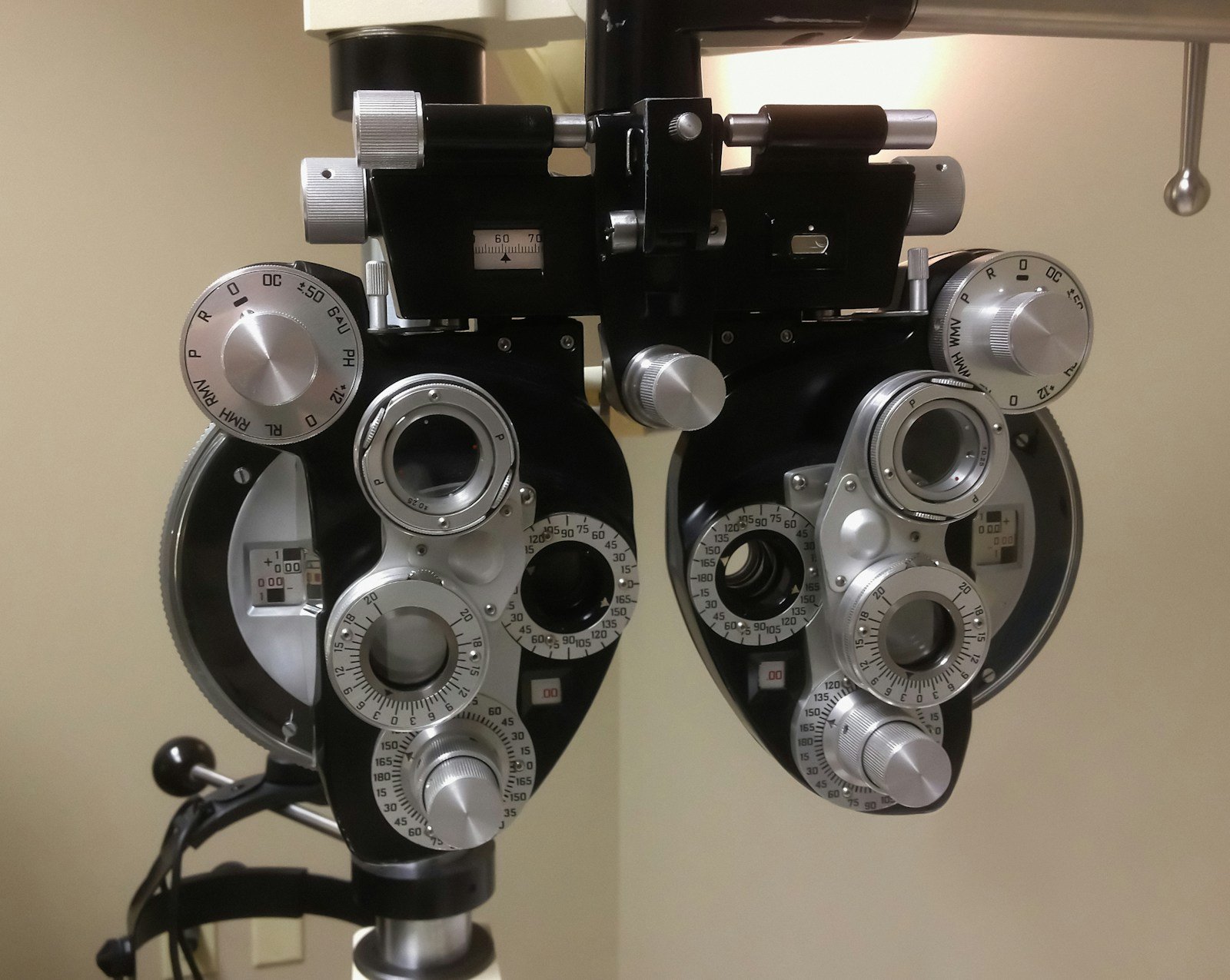
PRK creates no flap, which makes it a valuable option when the cornea is thin or the topography borderline. According to the French National Authority for Health (HAS), the absence of a corneal flap is an asset in certain at-risk situations. In return, the first days call for more patience than LASIK.
How does PRK proceed?
The surgeon first removes the epithelium, the thin layer of cells that covers the cornea. The excimer laser is then applied directly to the surface to correct the visual defect. No flap is cut. A bandage contact lens is finally placed to protect the eye during re-epithelialisation, that is, the regrowth of the removed cells.
This regrowth generally takes a few days. During this period, the eye may be sensitive, watery and remain light-sensitive. Vision stays blurred at first, then sharpens gradually over several weeks. The bandage contact lens is removed once the epithelium has reformed, at a follow-up visit. Recovery is therefore slower than after LASIK.
When is PRK preferred?
PRK is often chosen when the cornea lacks the thickness needed for LASIK. It also suits people exposed to ocular trauma: contact sports, martial arts, certain field occupations. Without a flap, there is no layer that could be displaced by an impact. A borderline corneal topography may also steer the choice towards this option.
Corneal thickness: the decisive criterion
Corneal thickness, measured by pachymetry, strongly guides the choice. LASIK consumes tissue for its flap, PRK preserves more of it. According to the French Society of Ophthalmology (SFO), a cornea that is too thin carries a risk of structural weakening called ectasia, which makes this measurement essential before any procedure.
In practical terms, the stronger the intended correction, the more tissue the laser must remove. On an already thin cornea, LASIK would risk leaving an insufficient reserve. PRK, which does not add the loss linked to the flap, then becomes a logical alternative. It is an engineering rationale applied to the living tissue of your eye.
Keratoconus clearly illustrates the importance of this criterion. This condition progressively distorts and thins the cornea. In its presence, LASIK is contraindicated, as it would worsen the fragility. PRK may sometimes be considered under strict conditions, but only after a thorough evaluation. No general rule can replace individual analysis here.
Dry eye: what you need to know
Transient dry eye is more frequent after LASIK than after PRK. The reason is anatomical: the flap severs part of the corneal nerves that regulate tear production. According to Inserm, these nerves regenerate over the months, but the discomfort may last longer than after surface surgery.
This dryness shows as a gritty sensation, discomfort or paradoxical watering. It most often remains temporary and improves with artificial tears. PRK, which creates no flap, spares the surface nerve supply more. The discomfort there is generally less and shorter-lived.
This factor matters particularly for certain people. If you already suffer from dry eye, if you wear contact lenses with difficulty or if you work long hours on screen, this point will be discussed during the assessment. It does not decide the choice on its own, but it weighs in the overall reflection.
Sport and profession: a deciding factor?
Yes, your lifestyle enters the equation. For people exposed to impacts, the absence of a flap makes PRK attractive. The French Society of Ophthalmology (SFO) points out that the LASIK flap, although adherent, remains theoretically dislodgeable by direct trauma. A boxer and an office worker do not therefore necessarily fall under the same choice.
- Contact sports (boxing, martial arts, rugby): PRK limits the risk linked to the flap.
- Field occupations or those exposed to projections: the absence of a flap is an asset.
- Need for very fast recovery: LASIK regains the advantage.
- Intensive screen work: the question of dryness is worth raising.
These pointers remain indicative. A recreational athlete with no risk of frontal impact is not necessarily excluded from LASIK. Conversely, a professional who cannot stop for long will have to weigh the slower recovery time of PRK. The cost of the different techniques may also come into play, but it must never take precedence over safety.
Why the assessment decides everything
The choice between PRK and LASIK is decided after the pre-operative assessment, not before. The HAS reminds us that no refractive surgery procedure should be proposed without a complete examination of the eye. Corneal topography, pachymetry, measurement of the correction and the state of the ocular surface: all of this determines the indication and rules out contraindications.
The key message to remember:
The choice between PRK and LASIK is decided after the pre-operative assessment, never before. It is not a starting preference, but the result of an analysis of your eye: thickness and shape of the cornea, correction required, state of the ocular surface and lifestyle. One technique is not « superior » to the other: it is suited, or not, to your situation.
The assessment also helps rule out certain situations. Keratoconus, a cornea that is too thin, a suspicious topography or severe dryness may change the indication, or even contraindicate any surgery. This evaluation time protects the patient. It turns a theoretical question, « PRK or LASIK? », into a personalised answer grounded in objective measurements.
Laser procedures, both PRK and LASIK, are performed at the Clinique Laser Victor Hugo in Paris, in an environment dedicated to refractive surgery. To understand how the examinations unfold and to prepare for them calmly, our page on the pre-operative assessment details each step. It is the essential starting point of any laser correction project.
Frequently asked questions
PRK or LASIK: which technique is more effective?
Neither is universally superior. For suitable corrections, medium-term optical results are considered equivalent by the French National Authority for Health. The difference lies mainly in recovery, faster with LASIK, and in indications, PRK being better suited to thin corneas. The choice depends on your eye.
Does LASIK or PRK hurt?
Both are carried out under local anaesthesia with eye drops. After LASIK, discomfort is most often mild and brief. After PRK, discomfort, watering and light sensitivity are common in the first days, while the epithelium regrows under the bandage contact lens. This discomfort then eases gradually.
How long does it take to recover vision with each technique?
After LASIK, vision is often functional as early as the next day. After PRK, it stays blurred for a few days, then sharpens over several weeks. This difference in timing is an important criterion if you have to resume an activity quickly. Your surgeon will give you a schedule suited to your case during the assessment.
Can you have LASIK with a thin cornea?
Not always. LASIK requires a sufficient thickness reserve, because the flap consumes corneal tissue. On a thin cornea, PRK is often preferred, as it preserves more of the structure. Pachymetry, the measurement of thickness, carried out during the pre-operative assessment, allows a safe decision between the two options.
Which technique should you choose when you do contact sports?
PRK is often preferred for people exposed to ocular trauma, such as contact sports. In the absence of a corneal flap, there is no layer that could be displaced by an impact. LASIK remains possible in many cases, but this factor will be discussed with your surgeon during the evaluation.
Is dry eye more frequent with LASIK?
Yes, transient dryness is more frequent after LASIK, because the flap severs part of the corneal nerves that regulate tears. It most often remains temporary and improves with artificial tears. PRK, without a flap, spares this nerve supply more, with discomfort generally less and shorter-lived.
How is the choice between PRK and LASIK decided?
The choice is decided after a complete pre-operative assessment, not before. Corneal topography, corneal thickness, correction required, state of the ocular surface and lifestyle are analysed together. No technique is decided in advance: the indication follows from objective measurements specific to your eye and your personal situation.
This article is for information purposes and does not replace a medical consultation. Every situation is unique: the choice of a refractive surgery technique is decided with your ophthalmologist, after a pre-operative assessment tailored to your eye.
Written and reviewed by Dr Moïse Tourabaly, ophthalmic refractive surgeon — former chief resident (Quinze-Vingts National Eye Hospital).
Last updated: July 6, 2026