Sport, swimming and flying after LASIK: when can you resume?
Having laser eye surgery often means regaining precious freedom for sport and travel. The question is when you can resume without taking risks. In short: gentle activities can restart within a few days, but the pool, the sea and contact sports call for more patience, while the cornea heals. Here is a realistic timeline, activity by activity, after LASIK.
Direct answer: the recovery timeline
Key points. Walking and light activity from the first few days; gym workouts and running generally after about a week; pool, sea, sauna and steam room to be avoided for 2 to 4 weeks to limit the risk of infection; contact sports and water sports with protection after about a month. Flying is possible soon afterwards, provided you keep your eyes hydrated. These guidelines are confirmed at your post-operative check-up.
The first few days: take it easy
Within the first 24 to 48 hours, the goal is to let the eye rest. Walking and everyday movements are not a problem, but avoid any effort that makes you sweat heavily: sweat running into the eye is irritating and is not desirable on a healing cornea. It is also essential to avoid rubbing your eyes. This reflex, so ordinary in daily life, can shift the corneal flap created during LASIK as long as it is not perfectly stabilised.
Gym workouts, running, cycling

Non-contact activities without splashing (fitness, stationary cycling, treadmill running) can generally resume after a few days to a week, depending on your comfort. Outdoors, remember protective glasses against wind, dust and sun. The fast visual recovery of LASIK often allows an early return, but listen to how you feel: visual fatigue or dryness at the end of a session are signals to ease off during the first few days.
Pool, sea, sauna and steam room
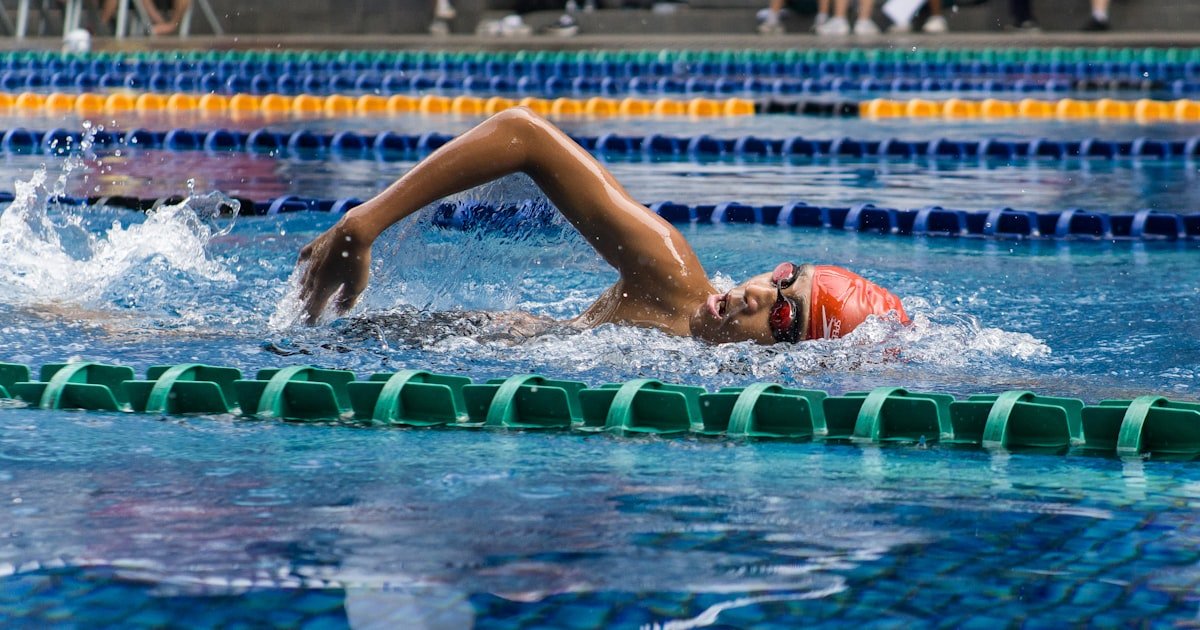
This is the most important point. Pool water (chlorine and germs), seawater and the moist heat of a sauna or steam room expose you to a risk of irritation and, above all, infection while the ocular surface is not yet fully healed. The freshly operated cornea is a potential entry point for micro-organisms, and a corneal infection after refractive surgery, although rare, is a serious complication to prevent. It is generally recommended to wait 2 to 4 weeks before returning to these activities. When you resume swimming, well-fitted swimming goggles add useful protection.
Contact sports and water sports
Sports where a blow to the eye is possible (martial arts, ball sports, combat sports) and water sports (surfing, diving, water skiing) call for more caution: allow about a month in general, ideally with suitable eye protection. The reason is mechanical: a direct trauma to the eye can, in the weeks following LASIK, shift the corneal flap. Cases of flap dislocation after a blow, including a long time after the procedure, are described in the literature, which justifies caution and wearing protection during high-risk activities. Talk to your ophthalmologist if you train at a high level.
Flying after LASIK
Good news for travellers: cabin pressure poses no particular problem and flying is feasible soon after the procedure. The only real discomfort comes from the very dry cabin air, which increases the ocular dryness that is common in the first few weeks. Bring artificial tears, hydrate your eyes regularly during the flight and avoid rubbing them. The visual recovery from LASIK is fast enough that driving and getting around are usually only hampered during the very first few days.
Why these waiting times? The healing process
All these guidelines stem from the same logic: LASIK creates a thin flap in the cornea, which adheres very quickly but remains fragile against rubbing, blows and contamination for a few weeks. Two risks therefore shape the timeline:
- The risk of infection while the surface is not healed: it explains the caution regarding water (pool, sea, sauna, steam room) for 2 to 4 weeks.
- The mechanical risk of flap dislocation: it explains the ban on rubbing the eyes and the protection recommended for contact sports for about a month.
These waiting times are averages. Your healing, the technique used and your activity are all factors that can adjust them. That is precisely the purpose of your follow-up appointment, where the timeline is personalised.
FAQ
Frequently asked questions
When can I resume swimming after LASIK?
Generally after 2 to 4 weeks, while the surface of the eye heals, to limit the risk of infection linked to water. When you resume, well-fitted swimming goggles offer additional protection. Your ophthalmologist confirms the timing during follow-up.
Can I fly a few days after the operation?
Yes. Cabin pressure poses no particular problem. The main discomfort comes from the dry air, which increases dryness: bring artificial tears, hydrate your eyes during the flight and avoid rubbing them.
When can I go back to the gym?
Non-contact activities without splashing (fitness, cycling, running) often resume after a few days to a week, depending on your comfort. Avoid efforts that make you sweat heavily during the first 48 hours.
Can sport dislodge the LASIK flap?
A direct blow to the eye can, in the following weeks, shift the corneal flap. That is why contact sports call for eye protection and a delay of about a month. In the absence of a blow, gentle sport does not present this risk.
Should I protect my eyes for sport?
Yes, it is advisable: outdoors, glasses against wind, dust and sun; for swimming, well-fitted goggles; for contact sports, suitable protection during the first month.
And after PRK?
As surface healing takes longer, the recovery times are generally a little more cautious than after LASIK, particularly for the pool and contact sports. Your surgeon will specify the timeline according to the technique used.
Can I wear sunglasses straight away?
Yes, and it is even advisable. Sunglasses protect against wind, dust and light, and reduce the urge to rub your eyes during the first few days.
Scientific sources
- Nair S, Kaur M, Titiyal JS. LASIK flap dislocation following direct face mask-induced mechanical trauma. BMJ Case Rep. 2022;15(2):e247355. PMID 35131797.
- Peterson J, Zubricky RD, Matharu K, Prakash G. LASIK Flap Dislocation Masquerading as Corneal Abrasion: Lessons and Pearls. J Emerg Med. 2023;65(2):e137-e139. PMID 37451964.
- Van de Pol C, Greig JL, Estrada A, Bissette GM. Visual and flight performance recovery after PRK or LASIK in helicopter pilots. Aviat Space Environ Med. 2007;78(6):547-553. PMID 17571652.
Further reading
- LASIK: procedure and post-operative recovery
- Dry eye after LASIK
- The pre-operative assessment
- PRK: surface laser surgery
Refractive assessment at the Cachan office · Tel. 01 45 47 08 11
In summary
After LASIK, the return happens in stages: light activity from the first few days, gym workouts and running around a week later, pool, sea, sauna and steam room after 2 to 4 weeks to limit the risk of infection, contact and water sports with protection after about a month. Flying is possible soon afterwards, provided you keep your eyes hydrated.
Two habits sum it all up: do not rub your eyes and protect the eye from water and blows while it heals. The exact timeline is confirmed at your check-up. Laser refractive surgery is performed at the Clinique Laser Victor Hugo, following a full assessment at the Cachan office.
This article is for informational and educational purposes. It does not replace a medical consultation. Recovery times are indicative and vary according to the technique and each patient. Always follow the personalised instructions of your ophthalmologist.
Written and reviewed by Dr Moïse Tourabaly, ophthalmic refractive surgeon — former chief resident (Quinze-Vingts National Eye Hospital).
Last updated: July 6, 2026