Dry eye after LASIK: is it normal and how long does it last?

Experiencing dry eye after LASIK is one of the most common effects of this procedure. Stinging, a gritty sensation, vision that fluctuates by the end of the day: these symptoms are often worrying, even though they are usually transient and expected. Understanding why they occur, how long they last and how to relieve them helps you get through the first few weeks with peace of mind. Here are the essentials to keep in mind.
Direct answer: common and usually transient
Key point. Dry eye after LASIK is very common: most patients feel at least mild discomfort during the first few weeks. It is mainly explained by the temporary severing of small corneal nerves when the flap is created, which disrupts the tear-production reflex. In the vast majority of cases, this dryness gradually eases as the nerves regenerate, generally over a few weeks to a few months, sometimes up to around a year. Artificial tears and appropriate follow-up help relieve the symptoms during this period. Pre-existing dryness, identified during the assessment, can prolong the discomfort and warrants specific preparation.
Why does LASIK cause dryness?
The cornea is one of the most richly innervated areas of the body. These nerves play a key role: they detect dryness and trigger tear production. During LASIK, cutting the flap temporarily severs some of these nerve fibres. The tear reflex is then less responsive for a few weeks, which promotes the sensation of a dry eye. This is a well-described and reversible mechanism: the nerves gradually regenerate and corneal sensitivity returns over time, accompanied by an improvement in symptoms.
The technique also matters. Surface surgery (such as PRK) and flap surgery (LASIK) do not affect the corneal nerves in the same way; SMILE, through a micro-incision, also disturbs the surface less. This is one of the reasons why the choice of technique is discussed on a case-by-case basis, depending on your cornea and your profile.
How long does it last?
The duration varies from one person to another. In most patients, the discomfort peaks during the first few weeks, then decreases markedly over the following three to six months as the corneal nerves recover. The usual course can be summarised as follows:
- The first few weeks: discomfort is generally most noticeable; this is the phase when artificial tears are most useful.
- The first few months: dryness decreases as the corneal surface recovers.
- Sometimes up to around a year: in some people, mild residual dryness may persist longer before fading.
Symptoms and clinical signs generally return to near-normal values over the course of the first year. A minority of people retain more lasting dryness, especially those who already had a dry-eye tendency before the procedure. This is one of the reasons why the preoperative assessment systematically evaluates the quality of the tear film.
Who is more at risk of dryness?
Some profiles are more prone to more pronounced or longer-lasting dryness. Identifying them before the procedure is precisely one of the goals of the preoperative assessment. The main factors are:
- pre-existing dry eye, even mild, before surgery;
- long-standing or intensive contact lens wear, which may have weakened the ocular surface;
- a particular predisposition: certain general illnesses, certain treatments, menopause, or a very dry environment (air conditioning, screens, heated air);
- dysfunction of the eyelid glands (meibomian glands), which impairs the quality of the tear film.
Having one of these factors does not mean you should give up on surgery. It means it is taken into account: the ocular surface is assessed, pre-existing dryness is treated before operating, and the technique is sometimes adapted. That is the whole point of a thorough assessment beforehand.
How can dryness be prevented and relieved?
Management begins before the procedure and continues afterwards. The aim is twofold: to prepare a healthy ocular surface, then to support healing. The most useful measures are:
- Before surgery: screen for and treat dryness or eyelid inflammation, optimise the ocular surface, take a break from lenses as instructed.
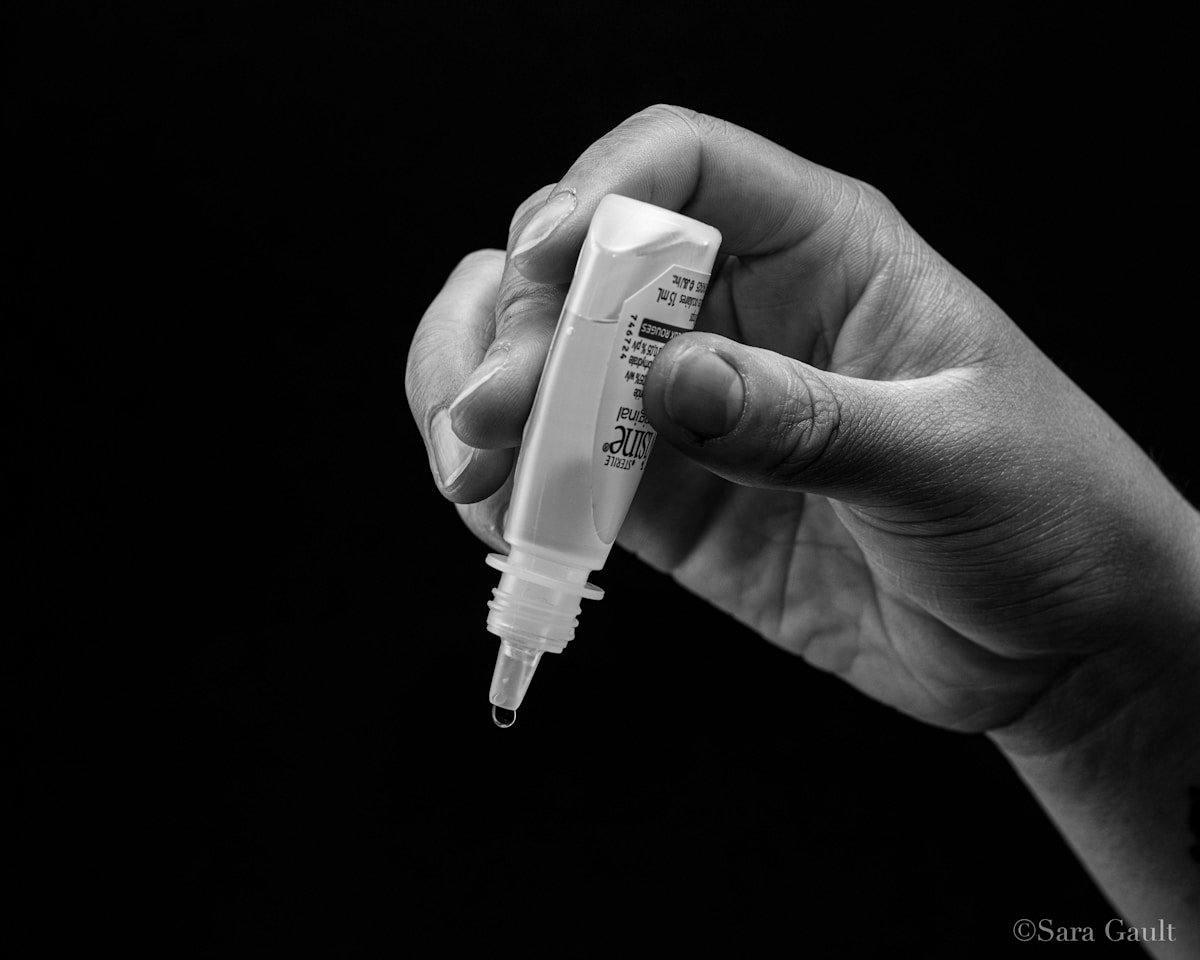
- Artificial tears: these are the foundation of comfort after the procedure. Preservative-free formulas are often preferred, to be used regularly as prescribed, without waiting for discomfort.
- Eyelid hygiene: warm compresses and gentle cleansing when the eyelid glands are involved, to improve tear quality.
- Simple habits: take breaks from screens, remember to blink, limit blowing air conditioning and stay well hydrated.
- Follow-up: check-up appointments make it possible to adjust treatment and verify that the cornea is recovering well.
In cases where dryness is more pronounced, other options exist (anti-inflammatory drops on prescription, punctal plugs, for example). They should never be started on your own: they are decided in consultation, after an assessment of your ocular surface. Note: techniques that preserve the corneal surface more, such as SMILE or PRK, are generally associated with less pronounced postoperative dryness than LASIK, a factor taken into account when choosing the technique.
When should you seek advice?
Mild, declining discomfort in the weeks following the procedure is part of the expected course. However, certain signs warrant getting back in touch without waiting for your next appointment:
- dryness that does not improve, or that worsens instead of decreasing;
- significant pain, marked redness or unusual sensitivity to light;
- a decline in vision that sets in instead of progressing favourably.
Better one call too many than discomfort that becomes established. Reassessment makes it possible to adjust treatment, and it is often simple to correct when addressed early.
FAQ
Frequently asked questions
Is dryness after LASIK permanent?
Most often, no. It is linked to the regeneration of the corneal nerves and eases gradually over a few weeks to a few months, sometimes up to around a year. Lasting dryness is rarer and mainly concerns eyes that were already dry before the procedure.
Should I worry if my eyes sting after the operation?
Stinging, a gritty sensation or vision that fluctuates by the end of the day are usual during the first few weeks. They are relieved by artificial tears. In case of significant pain, a decline in vision or marked redness, contact your ophthalmologist without delay.
Can surgery be done if I already have dry eyes?
Having pre-existing dryness does not systematically rule out surgery, but it is taken into account. It is assessed and treated before considering an operation, and the technique is sometimes adapted. That is precisely the role of the preoperative assessment: to prepare a healthy ocular surface in order to limit discomfort afterwards.
Are artificial tears enough?
In the majority of cases, yes, combined with good habits in front of screens and favouring preservative-free formulas. If dryness persists, your ophthalmologist can suggest additional measures during follow-up.
Does dryness affect all techniques in the same way?
No. Surface surgery (PRK) and flap surgery (LASIK) do not affect the corneal nerves in the same way, and SMILE preserves the surface more. This is one of the reasons why the choice of technique is discussed on a case-by-case basis.
Can this dryness be avoided?
It cannot always be avoided, but it can be limited: by screening for a dry-eye tendency before the procedure, treating it, and sometimes choosing a technique that preserves the surface more, such as SMILE or PRK.
Will dryness interfere with my screen-based work?
During the first few weeks, prolonged screen work can heighten the dry-eye sensation, because we naturally blink less in front of a screen. Regular breaks, preservative-free artificial tears and good hydration help get through this phase. The discomfort fades as the cornea recovers.
Scientific sources
- Raoof D, Pineda R. Dry eye after laser in-situ keratomileusis. Semin Ophthalmol. 2014;29(5-6):358-362. PMID 25325861.
- Chao C, Golebiowski B, Stapleton F. The role of corneal innervation in LASIK-induced neuropathic dry eye. Ocul Surf. 2014;12(1):32-45. PMID 24439045.
- Lau YT, Shih KC, Tse RH, Chan TC, Jhanji V. Comparison of Visual, Refractive and Ocular Surface Outcomes Between Small Incision Lenticule Extraction and Laser-Assisted In Situ Keratomileusis for Myopia and Myopic Astigmatism. Ophthalmol Ther. 2019;8(3):373-386. PMID 31325106.
Further reading
- LASIK: procedure and recovery
- SMILE: a preserved corneal surface
- PRK: surface surgery
- The preoperative assessment
- Dry eye: causes and solutions
Refractive assessment at the Cachan office · Tel. 01 45 47 08 11
In summary
Dry eye after LASIK is common, but almost always transient: it is linked to a temporary effect on the corneal nerves and recedes over a few weeks to a few months, sometimes up to around a year. A well-conducted preoperative assessment, artificial tears and regular follow-up make it possible to prevent and relieve it in the vast majority of cases. The key takeaway: prepare the ocular surface beforehand, support healing afterwards, and seek advice if the discomfort lasts. Laser refractive surgery is performed at the Clinique Laser Victor Hugo, after a thorough assessment at the Cachan office.
This article is intended for information and educational purposes. It does not replace a medical consultation. Any persistent discomfort after refractive surgery must be evaluated by your ophthalmologist. Sources: articles indexed on PubMed; recommendations of the French Society of Ophthalmology (SFO).
Written and reviewed by Dr Moïse Tourabaly, ophthalmic refractive surgeon — former chief resident (Quinze-Vingts National Eye Hospital).
Last updated: July 6, 2026