Cataract and diabetes: operating at the right time

In diabetic patients, cataracts often appear earlier and are operated on according to the same principles as for everyone else, but with additional precautions. The right time to intervene does not depend solely on visual discomfort: it takes into account how well the diabetes is controlled, the condition of the retina and the ability to keep monitoring it. Understanding these particularities helps you approach the decision to operate with peace of mind alongside your ophthalmologist.
Direct answer: operate when discomfort sets in, provided the diabetes and the retina allow it
Key takeaway. Cataract surgery is feasible in diabetic patients. It is considered when the cataract interferes with daily life, or when it prevents proper monitoring of the retina. Before operating, we look for reasonably well-controlled diabetes, a recent fundus examination and the absence of active, untreated proliferative retinopathy. The main precautions concern the risk of macular oedema after the operation, the choice of implant and a longer course of anti-inflammatory eye drops. When well prepared, the procedure gives good results.
Why do cataracts develop earlier in diabetic patients?
Diabetes promotes earlier clouding of the lens. Chronic hyperglycaemia alters the lens proteins through a process called glycation and disrupts the lens’s metabolism, which accelerates the loss of its transparency. In practice, many diabetic patients develop a cataract several years before the general population, and certain diabetes-related forms can progress more quickly.
Recent research confirms that diabetes is a risk factor for cataracts and that it influences their type and the age at which they appear. This does not change the nature of the operation, but it explains why the question often arises at a younger age.
When should you operate?
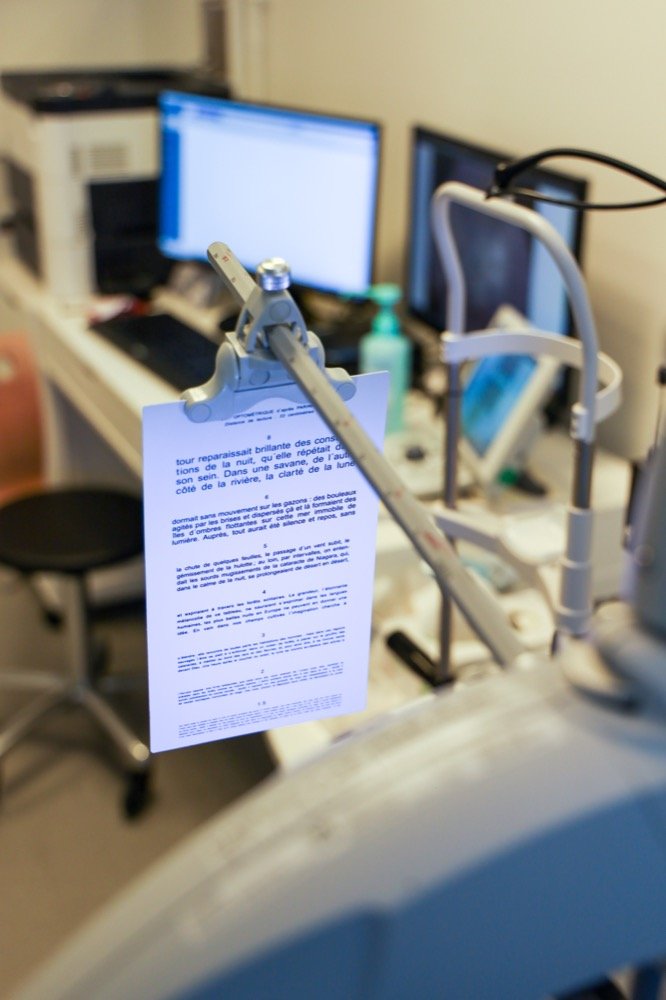
Two situations justify considering the procedure. The first is the same as for any patient: the cataract interferes with daily life (driving, reading, glare, reduced vision). The second is specific to diabetes: when the lens becomes too cloudy, it prevents proper examination of the retina. Yet in diabetic patients, monitoring the fundus and performing an OCT scan is essential for detecting and treating retinopathy. A cataract that obscures the retina can therefore justify operating, even if the perceived discomfort remains moderate.
Before intervening, we bring together a few favourable conditions as much as possible:
- Reasonably well-controlled diabetes, with a glycated haemoglobin target ideally below 8%, to be adjusted case by case with the diabetologist.
- A recent fundus examination and, if needed, a macular OCT scan, to assess the retina before the operation.
- The absence of active, untreated proliferative retinopathy: progressive retinopathy is managed beforehand, because surgery can promote its progression.
Precautions specific to diabetic patients
Cataract surgery in diabetic patients uses the same phacoemulsification technique as in other patients, but a few points call for particular vigilance, both before and after the procedure.
- A full retinal assessment before the operation, with prior treatment of any active retinopathy. Diabetes and diabetic retinopathy increase the risk of complications and can limit the visual gain: it is better to stabilise the retina first.
- An increased risk of macular oedema after the procedure. Postoperative cystoid macular oedema is more common in diabetic patients; it warrants close monitoring, with OCT if needed, and suitable anti-inflammatory treatment.
- A cautious choice of implant. In the presence of retinopathy, diffractive multifocal implants are often not recommended: they can reduce contrast and visual quality on an already fragile retina. A monofocal or extended depth-of-focus (EDOF) implant is generally preferred.
- A prolonged course of anti-inflammatory eye drops, often six to eight weeks instead of four, to limit the risk of macular oedema.
Care coordinated with the diabetologist
Success relies on coordination between the ophthalmologist and the diabetologist. Dr Tourabaly consults at the Diabet’ centre (Paris 13), dedicated to the multidisciplinary management of diabetes, which makes it easier to organise the retinal assessment and the follow-up before and after surgery. The preoperative assessment can be carried out on site or at the Cachan practice. The cataract procedure itself is performed at Clinique Sainte-Geneviève, after this complete assessment.
FAQ
Frequently asked questions
Does diabetes prevent cataract surgery?
No. Cataract surgery is entirely feasible in diabetic patients. It simply requires suitable preparation and precautions, particularly a retinal assessment before the procedure and closer monitoring afterwards.
Do you need perfectly controlled diabetes to be operated on?
Good glycaemic control is desirable, with a glycated haemoglobin target often below 8%. It does not need to be perfect, but it is discussed with the diabetologist in order to choose the best time and to limit the risks.
Why monitor the retina before the operation?
Because diabetes can affect the retina. Progressive retinopathy must be treated before surgery, as the operation can promote its progression. The assessment also helps to prevent the risk of macular oedema after the procedure.
Can a multifocal implant be used in a diabetic patient?
It is possible if the retina is healthy, but in the presence of retinopathy multifocal implants are often not recommended because they can reduce visual quality. A monofocal or EDOF implant is then generally preferred. The choice is made case by case.
Is recovery longer in diabetic patients?
Visual recovery is often comparable, but anti-inflammatory eye drops are prescribed for longer, generally six to eight weeks, and follow-up is closer in order to detect any macular oedema.
Where does the procedure take place?
The preoperative assessment is carried out at the Cachan practice or at the Diabet’ centre in Paris 13, in liaison with your diabetologist. Cataract surgery is then performed at Clinique Sainte-Geneviève.
Scientific sources
- Drimtzia E, et al. Diabetes and cataracts development: characteristics, subtypes and predictive modeling using machine learning. Medicina (Kaunas). 2024;60(12):2114. PMID 39859011.
- Risk factors and cumulative incidence of cystoid macular edema after simple cataract surgery: a systematic review and meta-analysis. Cureus. 2025. PMID 40525008.
- The impact of diabetes mellitus and diabetic retinopathy on prognosis and complications after cataract surgery: a retrospective cohort study. Medicine (Baltimore). 2026. PMID 42116355.
- Analysis of retinal specialists’ opinions on implanting diffractive multifocal intraocular lenses in eyes with underlying retinal diseases. J Clin Med. 2022;11(7):1836. PMID 35407444.
Further reading
- Cataract surgery
- Glaucoma and diabetes: an association to screen for
- Anti-VEGF intravitreal injections
Diabetic eye assessment at the Diabet’ centre (Paris 13) and at the Cachan practice · Tel. 01 45 47 08 11
Deciding on the right time with your ophthalmologist
The ideal time to operate on a cataract in a diabetic patient is decided after an eye assessment and a review of how well the diabetes is controlled. To discuss this, make an appointment with Dr Moïse Tourabaly, who consults in Cachan and at the Diabet’ centre in Paris 13. The surgery is performed at Clinique Sainte-Geneviève, in coordination with your diabetologist.
This article is intended for information and educational purposes. It does not replace a medical consultation. The decision to operate on a cataract in a diabetic patient must be assessed by your ophthalmologist, in liaison with your diabetologist. Sources: articles indexed on PubMed.
Written and reviewed by Dr Moïse Tourabaly, ophthalmic refractive surgeon — former chief resident (Quinze-Vingts National Eye Hospital).
Last updated: July 6, 2026